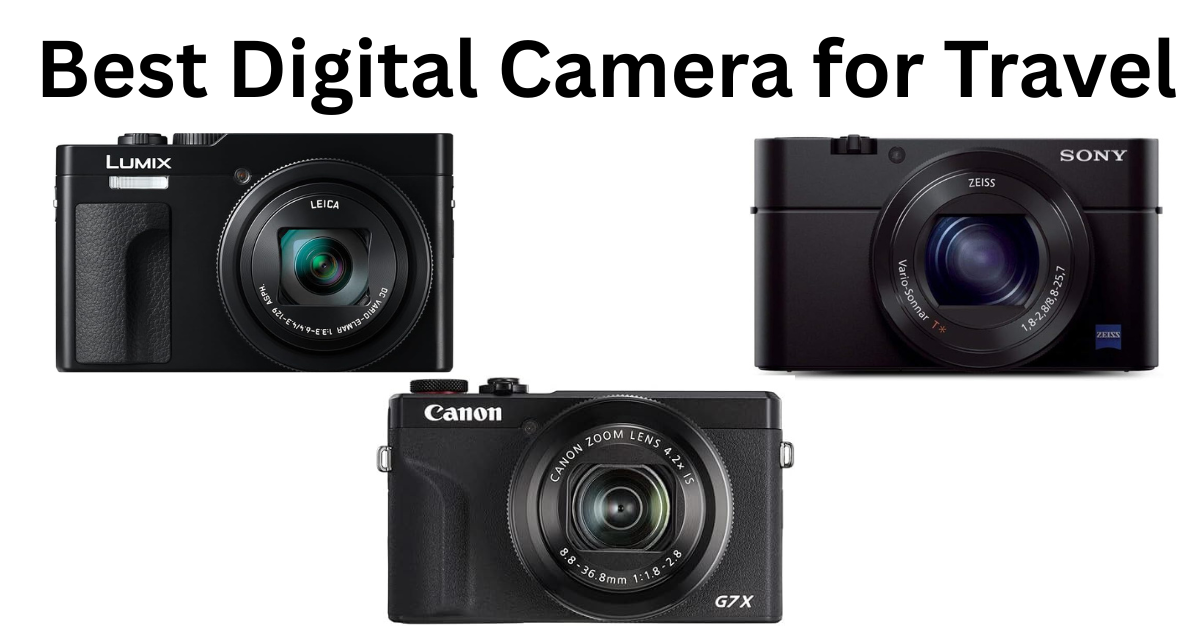
Looking for the best digital camera for travel? Compare 8 top picks for zoom, vlogging, portability, and image quality before you buy.
Finding the best digital camera for travel is not just about buying the most expensive model. The best digital camera for travel is the one that gives you the right mix of portability, image quality, zoom range, autofocus, and video features for the way you actually travel.
Some travelers want a pocket camera for vacations and city breaks. Others want a creator-friendly option for vlogging, while some prefer a small mirrorless camera with room to grow. In this guide, we compare the best digital cameras for travel based on specs, reviews, use cases, and real-world travel needs so you can choose the right camera with confidence.
Table of Contents
Quick picks (Top Recommendation)
- Best overall for most travelers: Sony RX100 VII
- Best for travel vlogging: Sony ZV-1 II
- Best pocket zoom for sightseeing and safari-lite: Panasonic Lumix ZS200D
- Best premium fixed-lens travel camera: Fujifilm X100VI
- Best for minimalist street and travel photography: Ricoh GR IIIx
- Best mirrorless travel camera for creators: Sony a6700
- Best beginner-friendly mirrorless value: Canon EOS R50
- Best for social-first creators who want Canon color: Canon PowerShot G7 X Mark III
Comparison table (Best Digital Camera for Travel)
To help you choose the best digital camera for travel, here is a side-by-side comparison of the top options based on portability, features, price, and ideal use case.
| Camera | Type | Lens style | Main strength | Main tradeoff | Best for |
|---|---|---|---|---|---|
| Sony RX100 VII | Premium compact | 24–200mm zoom | Best mix of pocketability, AF, versatility | Expensive for a 1-inch compact | Most travelers |
| Canon G7 X Mark III | Compact | 24–100mm zoom | Fast lens, creator-friendly appeal | Autofocus is not class-leading | Casual creators |
| Sony ZV-1 II | Compact vlogging camera | 18–50mm wide zoom | Better framing for vlogging | Short zoom range | Vloggers |
| Panasonic Lumix ZS200D | Travel zoom compact | 24–360mm zoom | Big reach in a small body | Smaller-aperture lens at the long end | Zoom-heavy trips |
| Ricoh GR IIIx | Large-sensor compact | 40mm-equiv prime | APS-C quality in a pocketable form | No zoom, niche focal length | Street/travel shooters |
| Fujifilm X100VI | Premium fixed-lens compact | 35mm-equiv prime | Image quality, handling, style | Expensive and inflexible | Photography-first travel |
| Sony a6700 | APS-C mirrorless | Interchangeable | Best hybrid upgrade path | Not pocketable; lenses add bulk | Advanced creators |
| Canon EOS R50 | APS-C mirrorless | Interchangeable | Easy entry into mirrorless | Less premium body/features | Beginners and upgraders |
Specs and positioning summarized from official product pages and major reviews.
Best digital camera for travel: detailed reviews
(i) Sony RX100 VII — Best Digital Camera for Travel Overall
The Sony RX100 VII is the easiest recommendation here because it solves the core travel problem better than most cameras: it stays small while still giving you a useful zoom range, strong autofocus, and solid 4K video. Sony’s official specs list a 20.1MP 1-inch sensor and a 24–200mm equivalent zoom, while DPReview calls it one of the most capable pocket cameras on the market.
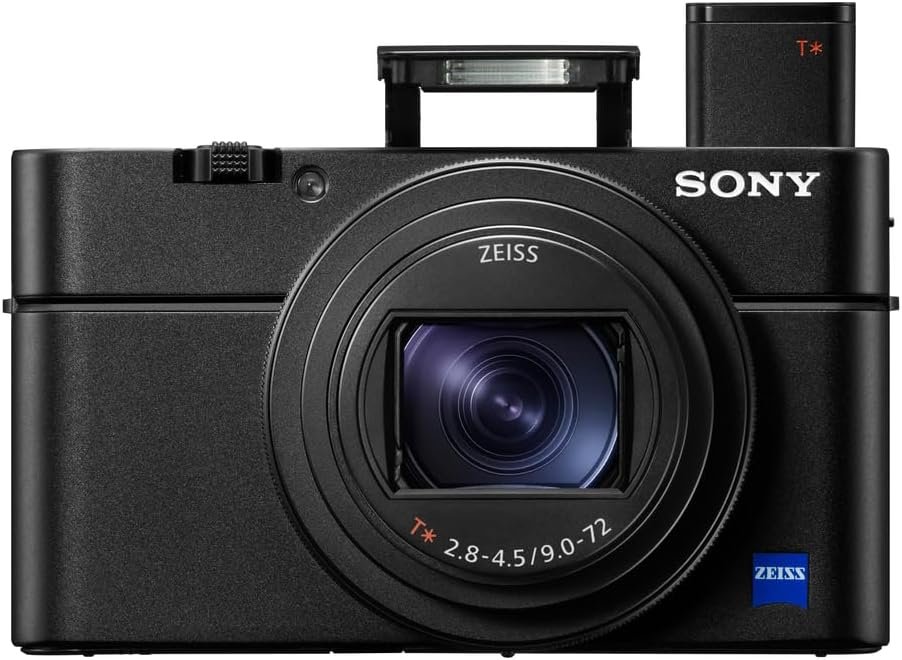
Why we picked it: it is the best balance of compact size and real versatility.
Key features
- 20.1MP 1-inch sensor
- 24–200mm equivalent zoom
- Real-time tracking autofocus
- 4K video
- Pop-up EVF
- Tilting screen
- Very compact body
Pros
- Truly travel-friendly size
- Useful zoom for streets, portraits, and distant subjects
- Excellent autofocus for a compact
- More flexible than prime-lens compacts
- Better all-arounder than many “creator-only” cameras
- EVF helps in bright light
Cons
- Premium price
- Telephoto aperture is not very bright
- Small body can feel cramped for larger hands
What makes it different: it is one of the few premium compacts that still feels like a real “take anywhere” zoom camera instead of a niche specialty tool.
Who should buy it: travelers who want one camera for city breaks, family trips, sightseeing, and light wildlife.
Who should skip it: buyers who mainly vlog themselves or want APS-C image quality.
Value assessment: expensive, but the convenience is real.
Best for: most travelers.
(ii) Canon PowerShot G7 X Mark III — Best for casual creators
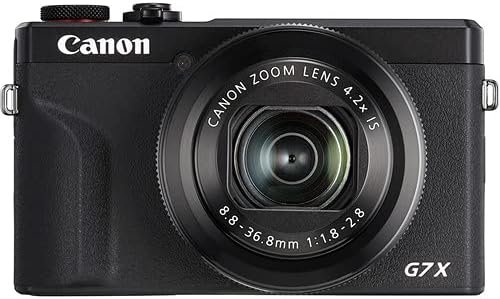
The Canon PowerShot G7 X Mark III remains attractive because it combines a 20.1MP 1-inch sensor with a bright 24–100mm equivalent f/1.8–2.8 lens in a small body. That bright lens is still appealing for indoor travel shots and lifestyle content. The catch is autofocus: DPReview found it decent overall, but noted visible hunting that makes it less convincing than stronger rivals.
Why we picked it: strong lens, familiar Canon look, and creator appeal.
Key features
- 20.1MP 1-inch stacked sensor
- 24–100mm equivalent f/1.8–2.8 zoom
- Optical stabilization
- 4K video
- Compact body
- Flip-up screen
Pros
- Bright lens is useful in low light
- Good everyday focal range
- Compact and easy to carry
- Strong social-media appeal
- Good image quality for class
- Simpler than mirrorless for casual users
Cons
- Autofocus trails the best Sony options
- Less versatile than RX100 VII
- Aging model in a competitive segment
What makes it different: the fast lens matters more than the spec sheet suggests if your travel style includes cafes, interiors, and handheld evening shots.
Who should buy it: casual creators who prioritize ease and a bright compact zoom.
Who should skip it: buyers who care most about dependable tracking AF.
Value assessment: still relevant, but no longer the safest “best overall.”
Best for: lifestyle creators and casual travel use.
(iii) Sony ZV-1 II — Best Digital Camera for Travel Vlogging
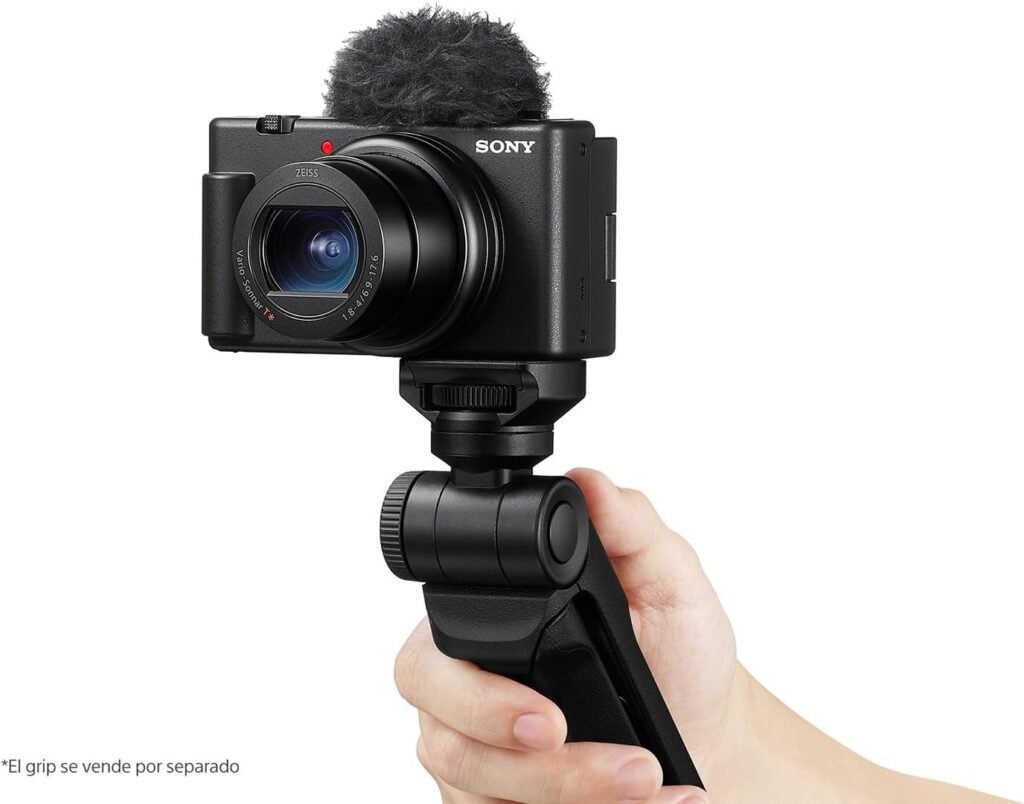
The Sony ZV-1 II is built around a 1-inch sensor and an 18–50mm equivalent lens, and Sony positions it directly as a compact camera for content creators and vloggers. That wide end is the big story: it is much easier for handheld self-recording than many older compact cameras with narrower starts.
Why we picked it: it solves the framing problem that hurts many compact vlogging cameras.
Key features
- 1-inch sensor
- 18–50mm equivalent zoom
- Compact body
- Directional microphone
- Creator-focused controls
- Flip screen
- 4K video
Pros
- Wider lens is excellent for selfies and walking shots
- Better travel-vlog framing than many compacts
- Portable and simple
- Better built for video than photo-first compacts
- Strong all-in-one creator option
- Good onboard audio features
Cons
- Limited zoom reach
- Less satisfying for photography-first buyers
- Not the best option for safari or distant subjects
What makes it different: this is the camera here that most clearly prioritizes the creator workflow over classic stills-first travel shooting.
Who should buy it: vloggers and solo travelers who film themselves often.
Who should skip it: photographers who want more zoom flexibility.
Value assessment: worth it if video is your priority.
Best for: travel vlogging.
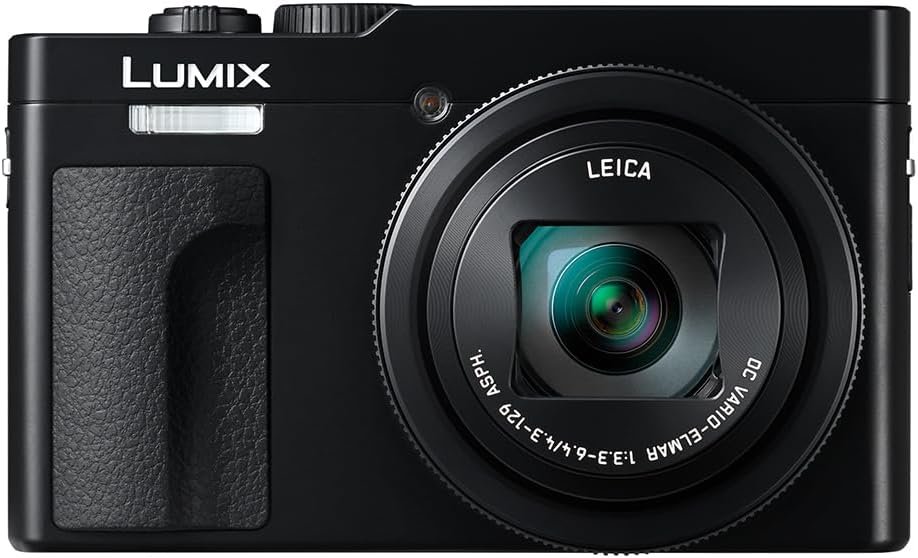
(iv) Panasonic Lumix ZS200D — Best digital camera for safari and travel reach
The Panasonic Lumix ZS200D uses a 20.1MP 1-inch sensor with a 24–360mm equivalent 15x zoom. That gives it something many travel compacts lack: real reach for landmarks, wildlife parks, and distant detail. Travel-camera roundups still highlight this style of long-zoom compact for exactly that reason.
Why we picked it: reach matters more than megapixels on many trips.
Key features
- 20.1MP 1-inch sensor
- 24–360mm equivalent Leica zoom
- 15x optical zoom
- Compact body
- EVF
- Travel-oriented design
Pros
- Far more zoom than most pocketable rivals
- Great for sightseeing and distant subjects
- More versatile than fixed-lens compacts
- 1-inch sensor is a nice step above basic point-and-shoots
- EVF is useful outdoors
Cons
- Lens gets slower at longer focal lengths
- Not as creator-focused as ZV-1 II
- Image quality edge over phones shrinks in some conditions
What makes it different: this is the list’s practical zoom specialist.
Who should buy it: travelers who care about range more than absolute low-light performance.
Who should skip it: people who mostly shoot themselves or in dim interiors.
Value assessment: niche, but very useful in the right scenario.
Best for: safari-lite travel, sightseeing, cruises, and long-reach convenience.
(v) Ricoh GR IIIx — Best small digital camera for travel street photography
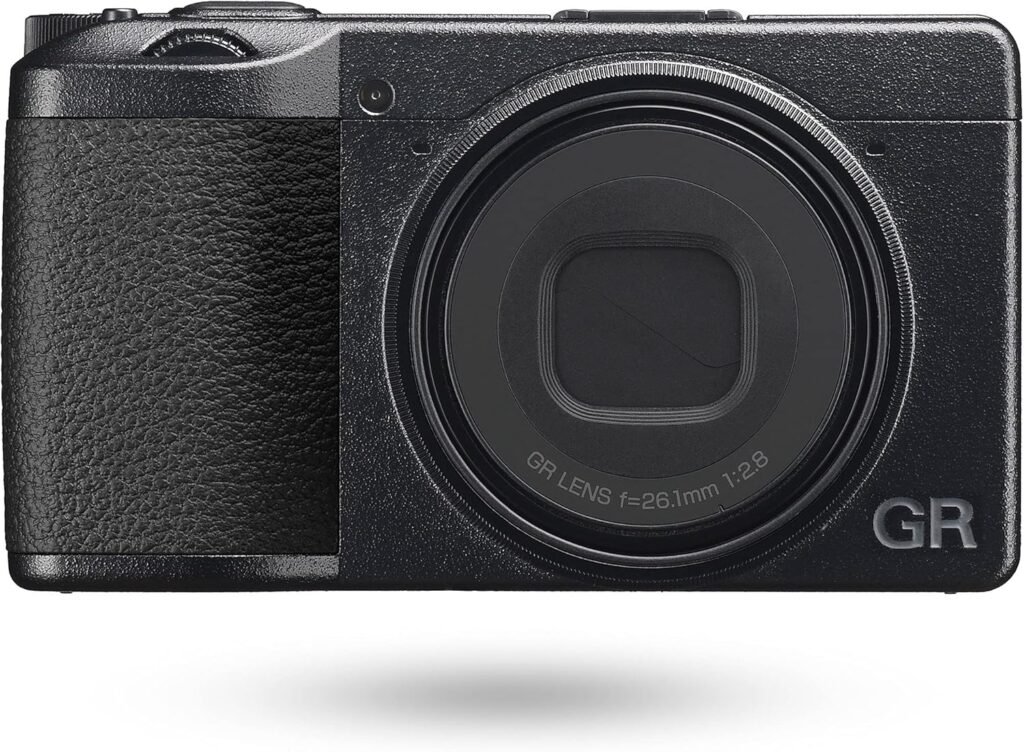
The Ricoh GR IIIx is unusual: it gives you an APS-C sensor and a 40mm-equivalent f/2.8 lens in a very compact body. That makes it one of the most photography-first options here, but also one of the least flexible. It is excellent if that focal length matches how you see, and a poor fit if you depend on zoom.
Why we picked it: big-sensor quality in a carry-everywhere body.
Key features
- 24.24MP APS-C sensor
- 40mm-equivalent f/2.8 lens
- Compact fixed-lens design
- Touchscreen
- Shake reduction
Pros
- Excellent portability for APS-C image quality
- Very strong street and documentary fit
- Simple, distraction-free concept
- Easier to carry than mirrorless systems
- More serious than typical compact cameras
Cons
- No zoom at all
- 40mm-equivalent view is not for everyone
- Not ideal for vlogging or family-all-rounder use
What makes it different: this is for photographers who already know they like a fixed focal length.
Who should buy it: minimalist travel photographers and street shooters.
Who should skip it: beginners who want flexibility.
Value assessment: high value for the right user, low value for the wrong one.
Best for: street, everyday carry, and discreet travel photography.
(vi) Fujifilm X100VI — Best Premium Digital Camera for Travel
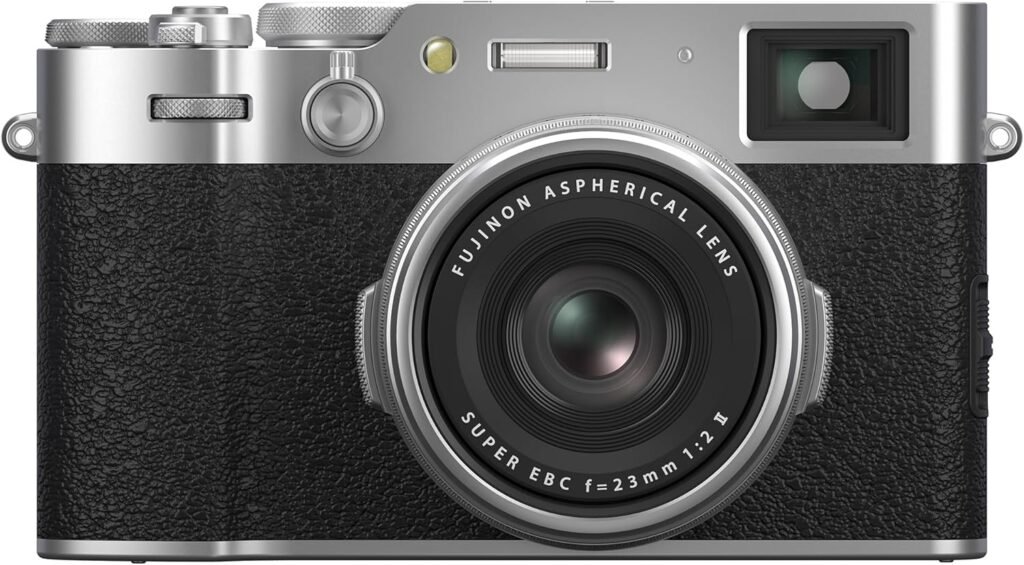
The Fujifilm X100VI pairs a 40.2MP APS-C sensor with a fixed 35mm-equivalent f/2 lens. It is one of the most desirable travel cameras on the market because it blends premium image quality, compactness, and a shooting experience photographers genuinely enjoy. But DPReview is also clear that it is not the right choice for buyers wanting flexibility or speed in every situation.
Why we picked it: premium image quality and a travel-friendly fixed-lens concept.
Key features
- 40.2MP APS-C sensor
- 35mm-equivalent f/2 lens
- X-Processor 5
- Compact premium body
- Advanced stills-first design
- 6.2K/30p support on official product page
Pros
- Excellent image quality
- Strong balance of size and output
- Great for travel storytelling
- Premium handling and design
- More inspiring than many generic hybrids
- Strong everyday focal length
Cons
- Expensive
- Fixed lens limits versatility
- Popularity and supply can complicate buying decisions
What makes it different: this is the camera for people who want travel photography to feel intentional, not just convenient.
Who should buy it: photography-first travelers who love a 35mm-equivalent field of view.
Who should skip it: anyone wanting zoom or interchangeable lenses.
Value assessment: premium, but more emotionally satisfying than most compacts.
Best for: premium travel photography.
(vii) Sony a6700 — Best Digital Camera for Travel and Content Creators
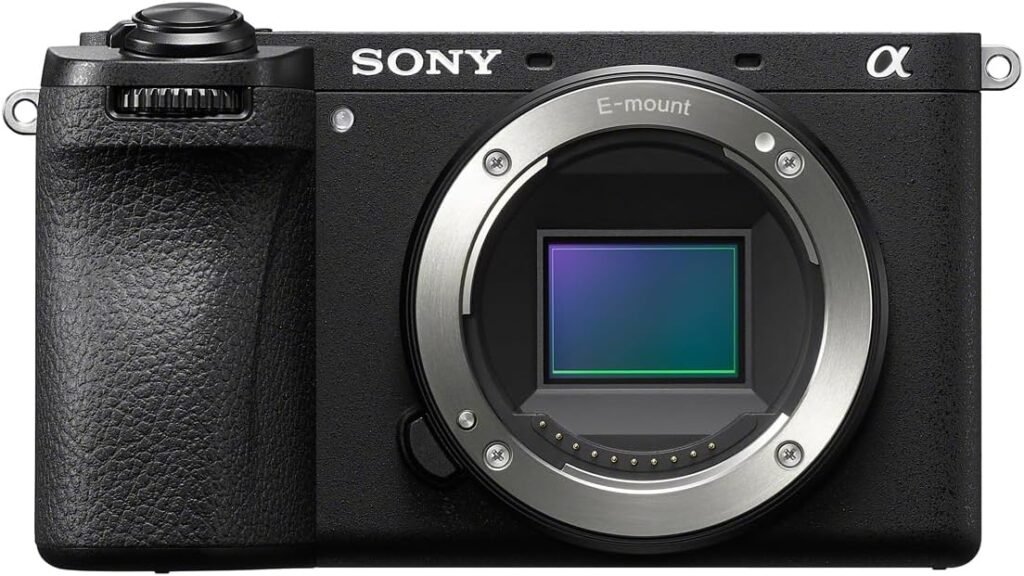
The Sony a6700 uses a 26MP APS-C sensor and Sony’s newer AI-assisted subject recognition, and reviews consistently describe it as a highly capable hybrid camera for both stills and video. It is not pocketable, but it gives you a much stronger long-term system than fixed-lens compacts.
Why we picked it: strongest overall hybrid upgrade path on this list.
Key features
- 26MP APS-C sensor
- AI subject recognition
- Interchangeable lenses
- Advanced autofocus
- Compact mirrorless body
- Travel/vlogging suitability
Pros
- Excellent autofocus
- Much more room to grow than compact cameras
- Strong stills and video balance
- Better lens flexibility for serious travel work
- Compact for a mirrorless body
- Better fit for ambitious creators
Cons
- Body is only part of the travel-size equation
- Lenses add cost and bulk
- Overkill for people who want simplicity
What makes it different: it is the best choice here if you want one camera system that can handle trips now and bigger creative goals later.
Who should buy it: creators and enthusiasts who are ready for lenses.
Who should skip it: minimalists who want an all-in-one compact.
Value assessment: expensive up front, but strong long-term value.
Best for: advanced hybrid travel shooting.
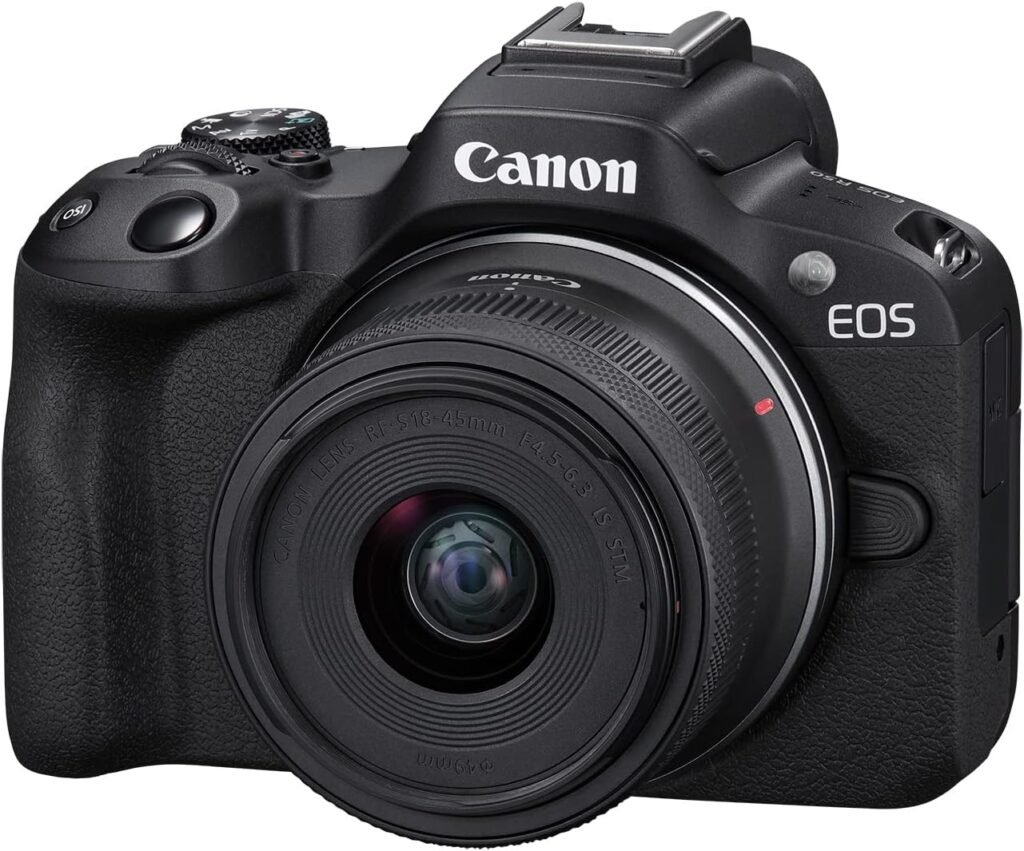
(viii) Canon EOS R50 — Best Digital Camera for Travel Beginners
The Canon EOS R50 uses a 24.2MP APS-C sensor, Dual Pixel CMOS AF II, and uncropped 4K/30p oversampled from 6K. It is easier to recommend than many entry cameras because Canon gives beginners a friendly route into interchangeable-lens photography without making the camera feel too stripped down.
Why we picked it: approachable, capable, and more future-proof than a basic compact.
Key features
- 24.2MP APS-C sensor
- Dual Pixel CMOS AF II
- 4K/30p oversampled from 6K
- Interchangeable lens system
- Compact mirrorless form
- Creator-friendly demo/webcam features
Pros
- Beginner-friendly
- Good autofocus
- Better image quality potential than 1-inch compacts
- Good travel starter system
- Useful for both photos and simple video
- Less intimidating than higher-end mirrorless bodies
Cons
- Kit-lens travel experience matters a lot
- Less premium than higher-tier bodies
- Not as compact as fixed-lens alternatives
What makes it different: it is the most accessible path here for readers who want to learn photography without jumping straight to enthusiast pricing.
Who should buy it: beginners, students, and upgraders from a phone or old DSLR.
Who should skip it: travelers who want a pocket camera.
Value assessment: one of the smartest starter-system buys here.
Best for: beginners and first mirrorless travel kits.
How to choose the best digital cameras for travel
Budget
The best digital camera for travel does not have to be the most expensive one. For some travelers, the best value comes from a beginner mirrorless model like the Canon EOS R50, while others may prefer an all-in-one compact camera.
Performance
When comparing the best digital cameras for travel, pay attention to autofocus, zoom range, low-light ability, and video quality. These features matter more than a long spec list you may never use.
Durability
Most of the cameras in this list are travel-friendly, but they are not rugged action cameras. If weather resistance is your top priority, you may need to look beyond this list into different categories.
Features
Do not chase features you will never use.
Use these shortcuts:
- Want zoom? Pick RX100 VII or ZS200D
- Want vlogging? Pick ZV-1 II
- Want premium stills? Pick X100VI or GR IIIx
- Want lenses and upgrade room? Pick a6700 or EOS R50
Brand Reputation
Sony, Canon, Fujifilm, Panasonic, and Ricoh all have strong reputations in this category. Official product pages and review coverage show each brand has a clear lane: Sony is strong in autofocus and hybrid performance, Canon is beginner-friendly, Fujifilm is premium and photography-focused, Panasonic remains strong in travel zoom, and Ricoh serves the street-photography niche.
Common Mistakes to Avoid
- Buying a fixed-lens camera when you really need zoom
- Buying a mirrorless body without considering total kit size
- Picking a vlogging camera for stills-first travel
- Buying based only on hype instead of travel style
- Ignoring how often you will actually carry the camera
Pick your camera type before your model
This is the decision most buyers skip. If you want maximum convenience, buy a compact. If you want maximum growth, buy mirrorless. If you want a focused photography tool, a premium fixed-lens camera can be excellent.
Think about zoom honestly
For city travel, 24–100mm or a fixed 35mm-equivalent lens may be enough. For safari, observation decks, wildlife parks, or cruise travel, longer zoom becomes much more important. That is why the Panasonic ZS200D and Sony RX100 VII stay relevant.
Vlogging needs are different
If you film yourself often, wide framing, flip screens, autofocus, and audio matter more than classic stills ergonomics. That shifts the answer toward the Sony ZV-1 II or a mirrorless option like the a6700 or EOS R50.
Bigger sensors are nice, but carrying matters more than people admit
APS-C models usually offer stronger image quality potential than 1-inch compacts, but they also push you toward more gear. For many travelers, the best camera is the one that actually leaves the hotel with them. That is why small premium compacts still rank so well in travel guides.
FAQ
Is a digital camera still worth it for travel over a phone?
Yes, especially if you care about zoom, better handling, stronger low-light results, or more reliable subject isolation. Travel-camera roundups still emphasize these strengths because phones still struggle most with reach and dedicated ergonomics.
What is the best compact digital camera for travel?
For most people, the Sony RX100 VII is the strongest all-around answer because of its combination of pocketable size, long zoom, and autofocus performance.
What is the best small digital camera for travel if I only care about photos?
The Ricoh GR IIIx and Fujifilm X100VI are the best photo-first options here, but both require you to be comfortable with a fixed lens.
What is the best digital camera for safari and travel?
From this list, the Panasonic Lumix ZS200D is the most obvious travel-zoom choice because of its 24–360mm equivalent lens.
Which travel camera is best for beginners?
The Canon EOS R50 is the easiest beginner mirrorless recommendation here, while the Sony RX100 VII is the easiest premium compact recommendation.
Related Post:
Final verdict
If you want the safest recommendation for the widest range of trips, buy the Sony RX100 VII. If your trip content is mostly video and talking-to-camera clips, buy the Sony ZV-1 II. If you want premium photography and do not need zoom, the Fujifilm X100VI is the most desirable option here. If you want a system camera you can grow into, the Sony a6700 is the strongest overall upgrade, while the Canon EOS R50 is the smarter beginner value.
The right choice is the one that matches your travel style, not the one with the most impressive headline spec. That is the difference between buying a camera you admire and buying one you actually enjoy traveling with.
Affiliate Disclosure:
This article may include affiliate links. If you choose to purchase through one of these links, I may receive a commission at no additional cost to you. These commissions help support the maintenance of this website. All opinions are my own, and I only feature products or services I believe are relevant and useful to readers.